
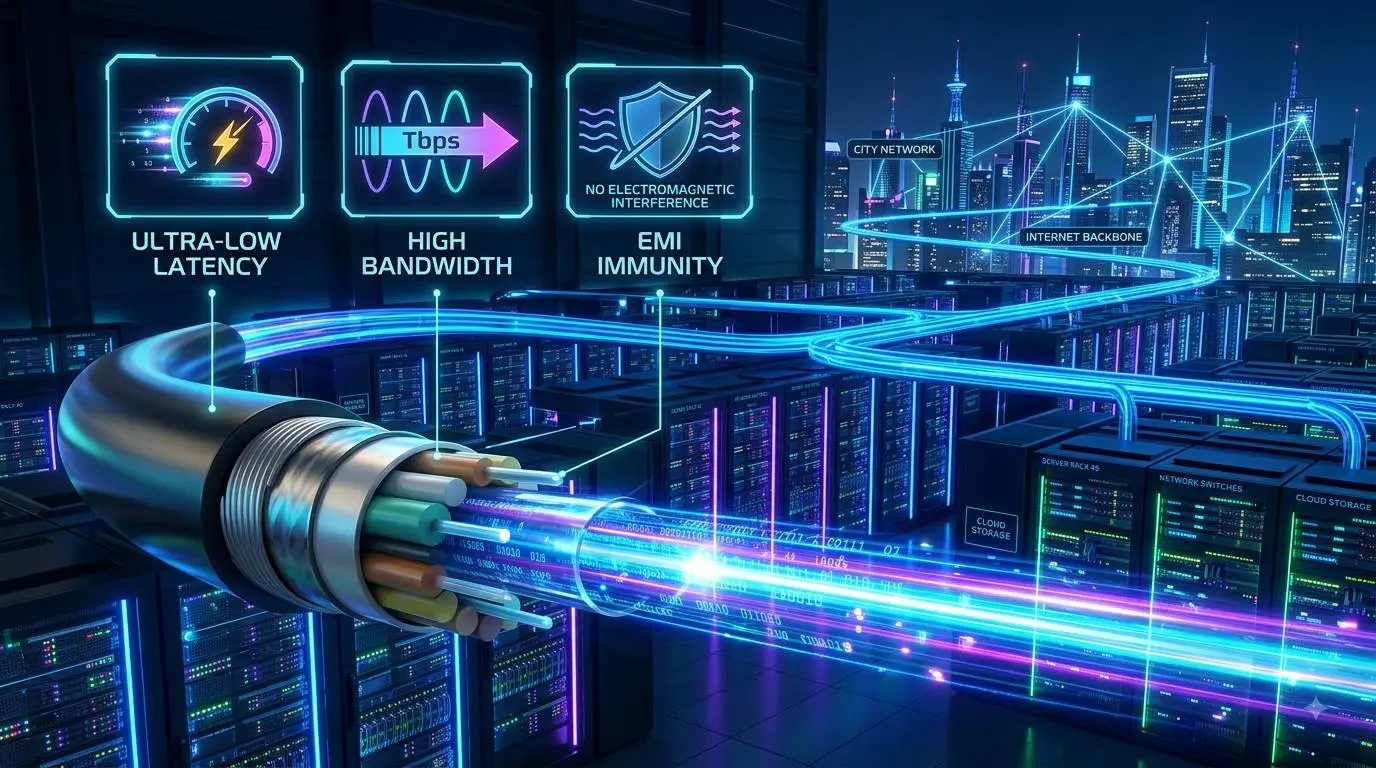
📌 Fiber optics, by transmitting data through light, provides speed, stability, and capacity that copper cable cannot compete with.
The growth of data consumption, high-quality video, CCTV cameras, and cloud services has made the need for high-bandwidth, low-latency infrastructure more critical than ever. Fiber optics is the answer to this need.
What Is Fiber Optics?
Fiber optics is a thin strand of glass or plastic that transmits data in the form of light pulses. This is why its transmission speed and capacity are far greater than copper cables.
Benefits of Fiber Optics for Organizations
- High speed and bandwidth: Enables data transfer at gigabit speeds and beyond, without quality loss over long distances.
- Stability and reliability: Resistance to electromagnetic noise and interference keeps communication quality stable.
- Long distance: Unlike copper cable, optical signals maintain quality over long distances.
- Enhanced security: Tapping into fiber optic cable is much more difficult than tapping copper cable.
- Future-ready: The high capacity of fiber enables speed upgrades without replacing infrastructure.
Fiber Optic Applications in Organizations
- Connecting buildings and branches within an organization (Backbone).
- Connecting data centers and servers.
- High-quality CCTV camera infrastructure.
- High-speed internet connectivity and cloud services.
Important Considerations for Fiber Optic Installation
Fiber optic installation requires expertise and precision tools: calculating attenuation, proper fusion splicing, and final testing with specialized equipment. A poorly executed installation can cause problems that are not immediately visible.
Summary
Fiber optics is a long-term investment for organizational communication infrastructure. If you are looking for speed, stability, and future-readiness, fiber optics is the right choice.
Frequently Asked Questions
Yes, by surveying the route and building conditions, installation through existing ducts and pathways is possible.
The initial cost of fiber may be higher, but considering durability, capacity, and no need for replacement in the future, it is more cost-effective in the long run.