
Comprehensive Guide to SEO, AEO, and GEO for Increasing Visibility and Attracting Traffic
Sustainable growth in website visitors is not the result of a single technique; it is the outcome of coordination among technical site health, crawlability and indexability, content quality, information architecture, internal linking, user experience, and source credibility. Alongside traditional search engines, AI-based response and search systems have also gained importance, and web content must be discoverable, understandable, extractable, and preferably citable for them.
This guide provides a practical roadmap for improving SEO, AEO, and GEO — from crawlability and canonical tags to Core Web Vitals, content structure, structured data, internal linking, Search Console, AI Visibility, and converting traffic into real business results.
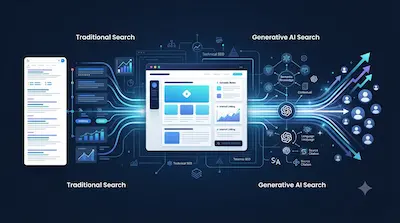
What Are SEO, AEO, and GEO and How Do They Differ?
SEO (Search Engine Optimization) is a set of actions that help search engines find, crawl, understand, and rank pages appropriately. AEO (Answer Engine Optimization) focuses more on providing clear and extractable answers for response systems. GEO (Generative Engine Optimization) focuses on making content understandable, usable, and citable in AI-powered generative and search systems.
- SEO: Being found and ranked in search engines.
- AEO: The ability to extract a precise and direct answer from content.
- GEO: Content comprehension, usage, and the ability to cite sources in generative environments.
These boundaries are not entirely uniform in the industry, and some sources consider AEO and GEO overlapping. Practically, it is best to view them as three complementary layers: SEO builds the technical and content foundation, AEO improves responsiveness, and GEO focuses on content presence in generative search experiences.
1. Discoverability and Crawlability
A page that crawlers cannot access will have limited opportunities for visibility even if it has excellent content. Therefore, the first step in SEO is ensuring technical access and having crawlable paths to important pages.
- Important pages should be accessible via standard HTML links.
- Important pages should not rely solely on JavaScript for discovery or rendering main content.
- URL paths should be stable and logical.
- WAF layers, CDNs, rate limiting, or authentication should not inadvertently block crawlers.
- Important pages should be discoverable through navigation, related pages, or other internal paths.
2. Indexability and Index Control
Being crawled is not the same as being indexed. After fetching a page, the search engine must determine whether it is suitable for indexing. The robots, noindex, X-Robots-Tag, and canonical directives should align with the page's actual purpose.
- Important pages should not be unintentionally set to
noindex. - Removed pages should not remain with successful responses and empty content.
- Canonical should point to the preferred and valid URL.
- Duplicate URLs and unnecessary parameters should be consciously managed.
- Before publishing, it should be clear whether each page is intended to be indexed or not.
3. URL Structure
URLs should be short, stable, understandable, and aligned with the actual content structure. Changing URLs without real need can cause loss of previous signals and unnecessary redirects.
- URLs should be as short and meaningful as possible.
- Multiple URLs for the same content should be prevented.
- Path changes should be managed with appropriate redirects.
- A page's URL should not contradict its actual topic.
4. Sitemap and robots.txt
A sitemap is a list of important URLs that can simplify page discovery and monitoring; however, it does not replace proper internal linking. The sitemap should primarily include canonical and indexable URLs, and the last modification date should be accurate.
robots.txt is also a crawl control tool and should not be confused with noindex. Blocking the crawl of a URL does not necessarily produce the same result as noindex, since the crawler may never see the page content or the directives within it.
5. HTTPS and HTTP/2
HTTPS is an essential foundation for modern web security and user trust. A valid certificate, proper HTTP to HTTPS redirects, and prevention of mixed content should all be verified.
HTTP/2 can also improve loading performance through multiplexing and reducing the cost of multiple requests. However, HTTP/2 does not replace optimization of content, images, CSS, and JavaScript; it should be considered part of the site's performance stack.
6. Speed, Core Web Vitals, and Render Blocking
Actual page performance should be evaluated from the user's perspective, not just from a score. The three main Core Web Vitals are LCP for main content display speed, INP for interaction responsiveness, and CLS for visual stability.
Items that typically need attention
- Unnecessary or render-blocking CSS and JavaScript should be reduced.
- Images should be served in appropriate dimensions and formats.
- Duplicate resources and unnecessary requests should be eliminated.
- Cache-Control should be properly configured for stable assets.
- Fonts and large assets should not load in the critical path unless needed.
- Image dimensions and element space requirements should be determined upfront to reduce CLS.
The goal is achieving a fast, stable, and usable experience — not merely scoring a perfect Lighthouse score.
7. Mobile SEO and User Experience
A large portion of web interaction happens on mobile devices. Pages should display properly across different viewports without unwanted horizontal scrolling, extremely small text, or untouchable elements.
- Main content on mobile should match the desktop version.
- Buttons and links should have adequate touch targets.
- Navigation and forms should be usable at narrow widths.
- Fixed elements or popups should not obscure main content.
- Pages should also be checked in portrait and landscape orientations.
8. Title, Meta Description, and Canonical
Page titles should be unique, accurate, and aligned with user intent. Meta Descriptions should provide a genuine and attractive summary of the page, not become a list of keywords. Canonical should specify the preferred URL and point to a valid and relevant page.
- Every important page should have a dedicated title.
- The title should match the actual page content.
- The description should be written for users, not for keyword stuffing.
- Canonical should be explicit and stable when needed.
- The distinction between SEO title and navigation label should be maintained.
9. Heading Structure and Semantic HTML
The heading structure should reflect the logical hierarchy of content. Typically, one h1 for the main page topic, then h2 for major sections and h3 and lower levels for subtopics. Headings should not be used merely to change text appearance.
This article's table of contents also uses real headings and stable anchors so users can navigate directly to specific sections. While this is not an independent ranking factor on its own, it improves navigation and page structure understanding.
10. Structured Data and JSON-LD
Structured data can make the type and attributes of page content clearer for content processing systems. The schema type should match the actual page content, and structured data should not be used to hide or fabricate false claims.
Depending on the page type, relevant schemas such as Article, Organization, Breadcrumb or other appropriate types can be used. JSON-LD usage should leverage the existing SiteForge implementation and Page metadata; a parallel system for generating metadata should not be created.
- Structured data should be consistent with visible content.
- Schema type should be chosen to match the page's actual nature.
- Author, date, and image information should be accurate when present.
- After building, the actual page output JSON-LD should be verified.
11. Internal Linking and Orphan Pages
Internal links help users navigate the site and also clarify the thematic relationships between pages. Important pages should not be isolated on an island without reason.
An Orphan Page is a page without a proper internal path from other pages. While some campaign landing pages or temporary pages may intentionally have such structure, main site content should have natural internal paths.
- Link from related articles to service or main guide pages.
- Link from main topic pages to more specialized content.
- Anchor text should clarify the destination for the user.
- Duplicate and unnecessary links should be avoided.
12. Topic Clusters and Content Architecture
For broad topics, it is best to create a main topic page with a collection of related specialized pages. These pages can include tutorials, comparisons, case studies, FAQs, and related service pages.
The goal of a Topic Cluster is not to produce a large number of pages; it is to logically cover different user needs and create clear connections between content. Each page should have independent value and should not be created solely to build an artificial network.
13. Search Intent and Content-User Need Matching
Before creating content, it should be clear what the user wants: defining a concept, learning, comparing, selecting a product or service, solving a problem, or taking an action. A page that misidentifies intent will not perform well even with good technical optimization.
- What exactly is the user asking?
- What stage of decision-making are they in?
- What information is essential for their decision?
- Does the page provide the answer quickly and completely?
14. Useful, Original, People-first Content
Content should be written for humans first. Quality does not depend solely on article length; a short, precise article can have more value than a long, repetitive one. Added value can come from real experience, expert analysis, examples, data, case studies, or explanations not easily found in other sources.
Signs of Quality Content
- Clear answer to the main question.
- Sufficient topic coverage without aimless rambling.
- Examples and practical experience when possible.
- Stating limitations and usage conditions.
- Referencing credible sources for important claims.
- Genuine updates when information changes.
15. Expertise, Experience, Authoritativeness, and Trustworthiness
Users should be able to determine who provided the content and why it can be trusted. In specialized topics, clear authorship or organization, relevant experience, sources, evidence, and contact information can strengthen this trust.
- Author or organization name should be clear when topic relevance warrants it.
- Publication and update dates should be accurate for time-sensitive content.
- Important claims should be accompanied by appropriate evidence or sources.
- Organization identity and contact information should be accessible on appropriate pages.
16. GEO and Citability in AI Systems
GEO should not be seen as a collection of artificial tricks to fool generative models. Its foundation is the same sound web principles: crawlability, accurate content, clear structure, defined entities, verifiable evidence, and credible sources.
If a page is about a specific organization, product, service, or concept, the name and definition of that entity should be consistent across the site. The system should be able to determine the page topic, its relationship with other pages, and which part of the text is a specific claim or usable answer.
17. AEO and Direct Answers to Questions
For specific questions, the main answer should be provided at the beginning of the relevant section in clear language. Details, examples, limitations, and context can then be added.
Pattern: Question → Direct Answer → Explanation → Example
For example, for the question "What is the difference between GET and POST?", first provide a short and precise answer, then explain details about URL, request body, security, and usage for each method. This structure is both understandable for users and makes the text more organized for answer extraction.
- Write definitions explicitly.
- Do not hide the main answer behind lengthy introductions.
- Present comparisons in tables or clear bullet points.
- Cover real frequently asked questions with complete answers.
18. AI Crawlers and Content Access
If the site's goal is presence in AI search experiences, it should be verified that relevant crawlers have access to the intended public content. This verification should be done alongside robots.txt, WAF, CDN, rate limiting, and other security controls.
No single crawler or file guarantees that content will definitely appear in an AI system's responses. Content quality, source credibility, accessibility, and topical relevance remain fundamental factors.
19. Image Optimization
Images are both part of the experience and part of the page information. For important images, descriptive and relevant alt text should be written; alt text should not be a place for keyword repetition.
- File names should be meaningful when possible.
- Image dimensions should be specified to prevent layout shift.
- Image format and size should be appropriate for the use case.
- Unnecessary decorative images should not add extra load.
- Images should be responsive so the appropriate version is served for each viewport.
20. 4xx, 5xx Errors, and Redirects
Technical errors can disrupt both user experience and crawling. Important pages returning 404, 410, or 5xx errors should be investigated promptly.
| Status | Meaning | Typical Action |
|---|---|---|
| 404 | Resource not found | If the URL has moved, create an appropriate redirect; otherwise, the page is genuinely removed. |
| 410 | Resource intentionally removed | Can have more precise meaning for genuinely removed content. |
| 301/308 | Permanent redirect | Redirect to the relevant and preferably final destination; do not create redirect chains. |
| 5xx | Server-side error | Investigate error source and service stability; recurring errors have high priority. |
21. Measuring SEO, Search Console, and Analytics
After publishing, we need to know what impact changes have had. Important Search Performance metrics include Impressions, Clicks, CTR, Average Position, and actual Queries. Analytics also shows user behavior after arrival.
- Find pages with high Impressions and low CTR.
- Find queries where the page appears but doesn't have a complete answer.
- Compare pages with Organic Traffic against Conversion.
- Measure trends over an appropriate time period, not just a single day.
22. Measuring AI Visibility and Referral
Visibility in AI environments does not necessarily lead to clicks. Therefore, it is best to separate three concepts: Visibility for presence or being seen, Citation for source referencing, and Referral for traffic that actually entered the site from an AI system.
- Periodically review important questions in your business domain.
- Track pages and sources that are most frequently cited.
- Analyze AI referrals separately from other traffic sources.
- When direct data is unavailable, avoid claiming precise and unverifiable numbers.
23. IndexNow and Publishing Changes
IndexNow can speed up URL change notifications for supported search engines, but it does not replace sitemaps, crawling, or proper site structure. If the site uses it, only URLs that have actually been created or updated should be submitted.
24. Original Research and Real Added Value
One of the best ways to create a content advantage is publishing information that reflects your unique experience or data: test results, case studies, trend analysis, real comparisons, internal statistics, or practical experience.
Such content can create more value for users and also increase the likelihood of receiving links and citations — especially when data collection methods and result limitations are also transparently explained.
25. Conversion Matters More Than Raw Traffic
Increasing traffic alone is not the ultimate goal. If visitors who arrive have no connection to your services or topics, the visit numbers may have little business value. The better goal is attracting relevant users and providing a natural path to the next action.
- Define a clear goal for each page.
- CTAs should align with the page's intent.
- Contact forms or paths should not obstruct content reading.
- Measure Conversion alongside Organic Traffic and Queries.
26. Things You Should Not Do
- Keyword Stuffing and unnatural phrase repetition.
- Mass-producing low-value pages just to cover keywords.
- Rewriting others' content without added value.
- Artificial or unnatural link building.
- Incorrect or inconsistent Structured Data with page content.
- Hidden main content from users.
- Creating artificial content to deceive AI systems.
- Changing URLs continuously without real need.
- Excessive focus on Lighthouse instead of actual user performance.
- Using fake update dates without actual content changes.
27. Prioritizing SEO Actions
Not all issues have equal value. It is best to first fix items that are real barriers to crawl, index, or user access, and then move on to supplementary optimizations.
- Critical: Site or page is not accessible, crawlable, or indexable.
- Important: Metadata, structure, link, or content issues directly limit performance.
- Growth Opportunity: Page has real demand but weak CTR, ranking, or content coverage.
- Supplementary Improvement: Minor fixes to images, UX, structure, or content details.
28. Pre- and Post-Publishing Checklist
Before Publishing
- Topic and Search Intent are clear.
- Title and description are dedicated and accurate.
- Headings have a logical hierarchy.
- Main answer is in the appropriate and visible section.
- Content has independent value and sufficient evidence.
- Relevant internal links have been created.
- Images have appropriate alt text and specified dimensions.
- Canonical, robots, and indexability have been verified.
- Structured Data is valid when needed.
- Page has been checked on mobile and for performance.
After Publishing
- URL is placed in the appropriate sitemap.
- Page is discoverable through internal links.
- Crawl and index are monitored in webmaster tools.
- Potential 4xx and 5xx errors are checked.
- Impressions, Clicks, CTR, and Position are monitored over time.
- Actual user Queries are used for content expansion.
- AI Visibility and Referral are also monitored when reliable data exists.
29. Frequently Asked Questions about SEO and GEO
Does a table of contents directly improve rankings?
A table of contents is not an independent ranking factor on its own, but it improves page navigation, makes accessing different sections easier, and helps users understand the structure of long content faster.
Are keywords still important?
Knowing the terms users actually search for is important, but artificial and repetitive use of keywords is not the right approach. Related phrases should appear naturally in the title, heading, and text where they are useful for the user.
Does having JSON-LD guarantee site ranking?
No. Structured Data helps understand information structure and can under some conditions enable rich result display, but its presence alone does not guarantee ranking or special display.
Will GEO replace SEO?
No. For many sites, SEO remains the foundation of discoverability. GEO and AEO are best considered as complementary layers for responsive and generative environments.
Is a longer page always better?
No. Length should follow user need. Comprehensive content is valuable when each section adds useful and relevant information; lengthening text just to increase word count can worsen user experience.
How do we know if a page has good SEO?
A combination of evidence should be examined: crawlability, indexability, metadata, internal links, content quality and relevance, performance, Search Console data, relevant traffic, and ultimately Conversion. A single score does not provide a complete picture.
30. Continuous Improvement Cycle
SEO and GEO are not one-time processes. Algorithms, competitors, user behavior, content, and search technology change. Therefore, a practical cycle can look like this:
- Topic and Search Intent selection.
- Content creation or update.
- Technical and metadata review.
- Publishing and ensuring crawlability.
- Monitoring indexing and technical errors.
- Measuring Search Performance.
- Reviewing user behavior and Conversion.
- Checking AI Visibility when reliable data exists.
- Identifying issues or growth opportunities.
- Applying fixes and measuring again.
31. Summary
Sustainable visibility growth is the result of coordinating several factors: technical health, proper crawl and indexing, appropriate URL and metadata, correct sitemap and robots, internal linking, useful and original content, Search Intent, credibility, Structured Data, user experience, and proper performance.
For AEO and GEO, there is also no need for magical solutions or artificial tricks. Accurate, clear, extractable, verifiable, and accessible content is the best foundation for visibility in search engines and AI systems.
Ultimately, the goal is not a Lighthouse score or a single ranking; the goal is for relevant users, when searching for their actual needs, to find the appropriate content, be able to trust it, and when appropriate, lead to a valuable action such as a call, receiving a service, or conversion.